Digital Signatures for Integrity
Cryptographic signature that proves origin and detects whether data changed after signing.
A digital signature is a cryptographic mechanism used to help prove origin and integrity. In plain language, it gives recipients a way to check whether data or code was signed by the expected party and whether the content changed after it was signed.
Why It Matters
Digital signatures matter because security often depends on trust in software, documents, messages, and service identities. A signature helps relying systems decide whether content should be treated as authentic and unmodified.
They also matter because many important security workflows depend on proving integrity rather than just confidentiality. Software distribution, certificates, signed tokens, and secure update systems all rely on that distinction.
Where It Appears in Real Systems or Security Workflow
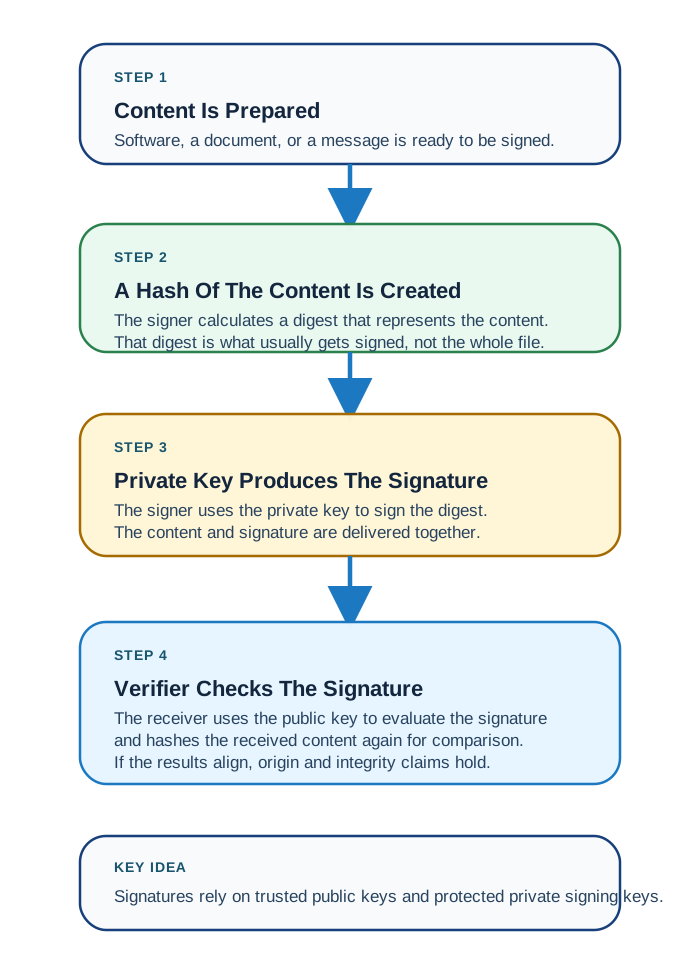
Digital signatures appear in Public Key Infrastructure, code signing, document signing, certificate issuance, signed tokens, and many trust-establishment workflows. They often use Hashing as part of the process so large content can be validated efficiently.
Security teams review digital signatures when evaluating trusted software updates, signed configuration artifacts, certificate chains, and the protection of private signing keys. If the signing key is exposed, the trust model can break quickly.
How Digital Signature Verification Usually Works
What A Digital Signature Does And Does Not Do
| Question | Digital signature answer | Nearby control with a different job |
|---|---|---|
| Did the expected signer approve this content? | It helps prove origin when the signing key is trusted | Digital Certificate helps bind the public key to an identity |
| Was the content changed after signing? | Verification should fail if the signed content no longer matches | Hashing provides the digest used in the process |
| Does the signature hide the content? | No. Signatures are for origin and integrity, not secrecy | Symmetric Encryption or Asymmetric Encryption protect confidentiality |
Practical Example
A software vendor signs a release package before publishing it. Customers or automated systems verify the digital signature before installing the package so they can detect whether the release came from the expected source and whether it was altered in transit or at rest.
That workflow is only as trustworthy as the signing key and trust chain behind it. If an attacker can sign malicious updates with the legitimate private key, the verification step may still succeed for harmful content.
Common Misunderstandings and Close Contrasts
Digital signatures are not the same as encryption for secrecy. Their main job is to support trust in origin and integrity, not to hide the content from authorized readers.
They are also not the same thing as a Digital Certificate. Certificates help bind public keys to identities, while digital signatures use keys to verify specific content.
It is also a mistake to think a valid signature always means the content is safe. The signature says something about origin and integrity under that trust model; it does not independently prove the content is harmless.
Related Terms
- Asymmetric Encryption
- Public Key Infrastructure
- Digital Certificate
- Certificate Authority
- Hashing
- Hardware Security Module
- Key Rotation
Knowledge Check
- What two things does a digital signature mainly help prove? That the content came from the expected signer and was not changed after signing.
- Does a digital signature encrypt the content for secrecy? No. Its main role is origin and integrity, not confidentiality.
- Why is protecting the signing key so important? Because anyone who controls the legitimate private signing key may be able to produce signatures that verifiers accept.